PvP & Endgame
🕳️ Wormhole Living — The Final Frontier
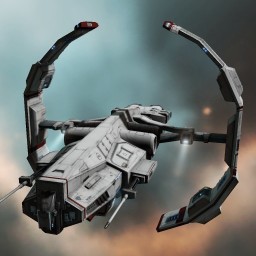
Wormhole space (also called "J-space") is the most dangerous and most rewarding territory in EVE. There are no gates, no local chat, no CONCORD, and no sovereignty. Every system is accessed through randomly-spawning wormholes that connect unknown space to k-space (normal space) and to each other.
Why Wormholes
- No local chat — you never know if someone else is in your system
- Sleeper NPCs (ancient human AI) drop extremely valuable salvage
- Massive ISK potential — C5/C6 wormholes can earn 500M–2B+ ISK/hour in fleet
- The best PvP hunting ground in the game — every fight is by choice, with full intel advantage for whoever scouts first
- Self-sufficient communities — wormhole corps are among the tightest-knit in EVE
Wormhole Classes
| Class | Difficulty | ISK Potential | Notes |
|---|---|---|---|
| C1 | Beginner | 20–50M/hr | Only small ship access, good for learning |
| C2 | Easy | 30–80M/hr | Has static connections to both k-space and other WH |
| C3 | Moderate | 50–150M/hr | Popular solo/small gang |
| C4 | Hard | 100–300M/hr | Only connects to other WH — self-contained |
| C5 | Very Hard | 200M–1B/hr | Capital-capable, major wormhole corps live here |
| C6 | Extreme | 500M–2B+/hr | Hardest PvE in the game, top-tier corps only |
Wormhole Mechanics
Wormhole Lifetime: Every wormhole has a mass limit (how much can pass through before it collapses) and a time limit (24h for most, 4h for "end of life" wormholes). Jumping large ships reduces the mass allowance significantly.
Wormhole Status Indicators: - "This wormhole is stable" — fresh, not close to collapse - "This wormhole is beginning to decay" — getting old, expires within ~4 hours - "This wormhole has had its stability disrupted" — heavily mass-stressed, near collapse - "This wormhole is on the verge of collapse" — do NOT jump through
Rolling Wormholes: Corps regularly "roll" unwanted connections by jumping heavy ships back and forth until the hole collapses. This seals off dangerous connections to enemy space.
Essential Wormhole Tools
- Tripwire or Pathfinder — wormhole chain mapping. You map every hole you scan so your corp knows the network
- EVE-Scout Rescue — if you get trapped in a wormhole, this player-run service will find you an exit
- Siggy — older but popular wormhole mapping tool
Wormhole D-Scan Discipline
In wormhole space, D-Scan is the only warning system you have. Develop the habit:
- Scan 14.3 AU / 360° before any action — is anything on scan?
- If you see combat probes — someone is hunting you. Get safe immediately.
- Narrow to 5° and point at your own structures to see if anything is nearby
- Ship logs in your corp log — if someone docked that you don't recognise, you have company
Living in a Wormhole
Most wormhole corps anchor a Citadel (Astrahus/Fortizar) inside the wormhole for docking and storage. Moving into a wormhole requires:
- A scanning ship to find the wormhole
- Multiple trips to bring your ships and assets through
- A bookmark of the wormhole from both sides (critical — don't lose the entrance)
- Corp mates you trust — there's no CONCORD to stop them from shooting you
⚔️ Faction Warfare — Structured Low-Sec PvP

Faction Warfare (FW) is the official PvP programme where capsuleers fight for the four empires in low-sec space. It's the best on-ramp to PvP in EVE: fights are frequent, ships are cheap, and there's a built-in reward structure.
How Faction Warfare Works
The four empires are split into two wars: - Amarr vs Minmatar — The Great War. The oldest and most storied conflict. - Caldari vs Gallente — The Corporate War. Fast-paced, competitive.
Enlist with one faction. Now you can enter faction warfare complexes — deadspace pockets in FW low-sec systems that ONLY your size of ship can enter. You capture plexes to contest and flip systems.
The Tier System
When your faction wins enough systems, your tier increases. Higher tiers = more LP per kill and per plex. At Tier 5 (maximum control), LP payouts are exceptional — some of the best ISK/hour in the game. Coordinated FW alliances weaponise this: contest systems in bulk, push tier, farm LP, cash out, repeat.
Why Faction Warfare for New Players
- Free to enter — no application, no background check
- Frigates and destroyers — cheap ships, affordable losses
- Structured fights — plexes enforce ship size limits (no battleships in frigate plexes)
- ISK rewards — fight and get paid. LP converts to faction modules worth hundreds of millions
- Learn every aspect of PvP — tackle, range control, cap management, fleeing — all learned through death
Best FW Ships (2026)
Frigates: - Kestrel / Merlin (Caldari) — cheap, effective - Rifter (Minmatar) — classic, still competitive - Atron (Gallente) — fast tackle - Punisher (Amarr) — brawl tank
Faction Frigates (once you have LP): - Dramiel — fastest frigate in the game, terrifying tackler - Worm — shield + drones, incredible tank for its size - Garmur — kiting missile frigate - Succubus — fast laser frigate
Destroyers: - Thrasher (Minmatar) — alpha strike destroyer, kills frigates instantly - Catalyst (Gallente) — blasters, extremely high DPS close range - Cormorant (Caldari) — railgun sniper
Faction Warfare LP Stores
This is where FW pays off: - Caldari/Gallente: Navy faction modules — Navy Magnetic Field Stabilisers, Navy Cap Batteries - Amarr/Minmatar: Faction weapons, implants, faction ships like the Comet and Firetail
Research the LP store before grinding — some items sell for 1,500–3,000 ISK per LP. At Tier 5 with active plex farming, this equals 200–400M ISK/hour.
🛡️ Fleet Combat — F1 Monkey to FC
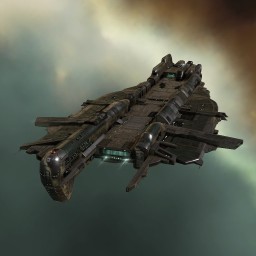
Understanding Fleet Hierarchy
EVE fleet combat has a defined structure. Understanding it makes you more effective and more valuable.
Fleet Commander (FC): Calls all targets, makes all decisions. Literally every action is on their command in organised fights.
Anchor: A player you follow manually. In fleet, new pilots are told to "anchor on" a specific anchor — you manually orbit them at 500m or right-click → "follow." This keeps you in formation.
Logi (Logistics): The healers of EVE. Basilisk/Scimitar (shield) or Guardian/Oneiros (armour) pilots repair fleet members under fire. Being good logi is extremely respected.
DPS Pilots: The "F1 monkeys" — lock the FC's target, press F1. That's it. Don't deviate, don't be clever.
Tackle: Fast ships holding enemies still — web them, scramble them, keep them in place for DPS to kill.
Fleet Communication
In organised fleets, do exactly what the FC says. Common calls:
| FC Call | What You Do |
|---|---|
| "Primary is [target name]" | Lock that target immediately and apply all DPS |
| "Secondary is [target name]" | Have this target pre-locked, ready to switch |
| "Align to [object]" | Align your ship, prepare to warp |
| "Warp fleet" | Warp to whatever the FC warps to |
| "Broadcast for reps" | If you're being shot, hit the shield/armour broadcast button immediately |
| "Scatter" | Warp out immediately to a random celestial |
| "Hold cloak" | Don't uncloak after jumping — wait for FC's call |
| "Jump on contact" | Jump through the gate as soon as you can |
Fleet Doctrines
A doctrine is a standardised set of ships a corporation uses together. Everyone flies the same fit so logi can rep consistently and DPS is predictable.
Common Doctrines:
- HAC fleet — Heavy Assault Cruisers (Muninn, Cerberus, Deimos) — high DPS, good survivability, popular null-sec doctrine
- Ferox fleet — cheap Caldari battlecruiser, high shield HP, railguns for long range. Entry-level null-sec fleet
- Caracal fleet — even cheaper, fast, high missile DPS at medium range. Popular in smaller alliances
- Alpha fleet (Apocalypse/Armageddon) — massive battleship alpha strikes for specific applications
- Jackdaw/Hecate — T3 destroyer fleets for fast tackle and harassment
How to Be a Good F1 Monkey
- Fit the doctrine exactly — every deviation makes the FC's job harder
- Stay in fleet comms — turn off music, mute notifications, listen
- Watch the broadcasts — someone calling reps is your job as logi, or signal that you're vulnerable as DPS
- Don't talk on voice unless asked — dead air lets the FC think
- Keep your finger on warp — be ready to leave at any moment
- Know your role — DPS pilots don't tackle, tackle pilots don't shoot before the FC calls primary
Becoming an FC
Good FCs are extremely valuable and rare. The path:
- Join lots of fleets — observe what good FCs do
- Scout — offer to fly ahead and report what you see. Low risk, huge learning
- Run small roams — 3–5 person frigate roam, you FC it
- Ask for feedback — most vets will help if you ask
- Read battle reports — EVE has written records of most major fights; study them
🏰 Capital Ships — The Big Stuff
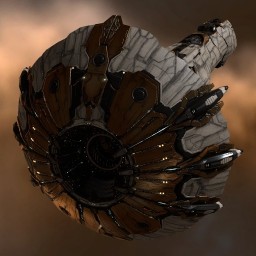
Capital ships require months of skill training, cost billions of ISK, and can only be used in low-sec, null-sec, and wormhole space (CONCORD destroys them in high-sec). They are some of the most powerful things in the game — and some of the most dangerous to fly.
Capital Ship Classes
Carrier: The backbone of null-sec ratting. Carries fighter drones — AI-controlled craft that do enormous damage and can be micromanaged. Fighters replace standard drones with vastly more powerful options.
- Combat Carriers (Thanatos, Archon, Nidhoggur, Chimera): Deploy fighters for combat, can remote-repair fleet mates
- ISK/hour ratting: 200–400M/hour in a carrier in good null-sec space
- Cost: 5–10B ISK typically
Dreadnought: The siege weapon of EVE. Enters "siege mode" which locks it in place for 5 minutes but massively boosts its tank and damage. Used to destroy structures, kill other capital ships, and in large fleet battles.
- Notable Dreads: Moros (Gallente), Phoenix (Caldari), Revelation (Amarr), Naglfar (Minmatar)
- Cost: 6–15B ISK
- Warning: A dreadnought in siege mode that is tackled and without support is dead. Never siege without backup.
Force Auxiliary (FAX): The fleet healer at capital scale. A FAX in Triage Mode provides enormous repair output to allied capital ships. Essential in any capital engagement.
- Notable FAX: Minokawa, Apostle, Ninazu, Lif
- Cost: 15–30B ISK
Supercarrier (Mothership): The super capital. Even larger than a carrier, with more fighters and enormous fighter bomber bays. Used in supercapital warfare only. Cannot dock in standard stations — requires a Keepstar citadel.
- Cost: 30–60B ISK and up
- Losing one is a major event
Titan: The largest ship in EVE. Two uses: the Doomsday Device (a superweapon that instakills most ships) and the Jump Bridge (creates a wormhole allowing allied fleets to teleport across the galaxy). A Titan kill is a global news event in the EVE community.
- Cost: 100B–300B+ ISK
- Requires months of dedicated skill training
- Losing one can cripple an alliance economically
Capital Rules
- Never fly what you can't afford to lose — applies ten times harder to capitals
- Never siege/triage without backup — you become a sitting target
- Always have an exit cyno — a cyno ship waiting to light a beacon you can jump to if tackled
- Know where cynos are banned — High-sec, some null-sec systems with cyno jammers
- Join a capital-capable corp — solo capital flying is suicide
💥 PvP — From Nervous to Dangerous
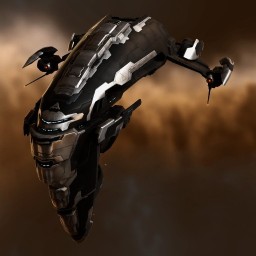
Starting PvP
Don't wait until you're "ready" — you'll never feel ready. Start small.
- Faction Warfare — structured low-sec PvP with ISK rewards. Best starting PvP content
- Frigate roams — cheap ships, fast losses, huge learning
- Join a fleet — anchor on FC, press F1, learn from watching
PvP Fundamentals
Range Control: - Short range weapons need to get close — use MWD + overheat to close distance - Long range weapons need to stay far — kite (keep distance while shooting)
Tackle: - Scram (2 points) — prevents MWD use, prevents warp - Point (1 point) — prevents warp only, doesn't stop MWD - Web — slows enemy, critical for landing hits with short-range weapons
Alpha Strike vs DPS: - Alpha = one-shot burst damage (artillery, torpedo salvos) - DPS = sustained damage over time (autocannons, blasters, drones)
Ship Size Rules: - Larger ships have trouble tracking smaller ships - Frigates orbiting too close to battleships take nearly zero damage from large guns - Small ships are vulnerable to drones and missiles regardless of size
The Most Important Concept — Transversal Velocity: Guns track a moving target by rotating. If your target is moving perpendicular to you (high transversal), your guns can't track it. If your target is moving straight at you or away (low transversal), your guns track perfectly. Understanding this determines every engagement choice.
Solo PvP
Solo PvP is the hardest and most rewarding playstyle in EVE.
The Solo PvP Loop: 1. Undock in a cheap, replaceable ship 2. Find a fight — scan complexes in FW space, gate camps, belts 3. Pick fights you can win, disengage from fights you can't 4. Die sometimes — that's fine 5. Learn what killed you, adjust
Best Solo PvP Ships (2026):
| Ship | Style | Why |
|---|---|---|
| Kestrel | Kiting | Cheap, missiles have range, great entry |
| Merlin | Brawl | Tough for its size, good shield tank |
| Rifter | Versatile | Classic, still works well |
| Stabber Fleet Issue | Kite | Fast cruiser, excellent solo |
| Vagabond | Kite HAC | Speed king, terrifying when piloted well |
| Omen Navy Issue | Brawl | Laser brawler, very strong 1v1 |
Gate Camps
Gate camps are players waiting at a gate to catch anyone jumping through. If you jump into a gate camp:
- Immediately crash the gate — turn around and jump back through before they lock you
- On the other side, cloak + MWD — cloak immediately, activate MWD (you'll still move while cloaked briefly), change direction
- Warp off — once you can warp, go anywhere except a gate towards safety
Learning to crash a gate and escape is a core survival skill.
Learning PvP
- Watch fleet comms — listen to experienced FCs
- Read battle reports (zkillboard.com) — understand what worked and what didn't
- Accept losses — a destroyed ship is a lesson, not a tragedy
- Fly what you can afford to lose — never undock what you can't replace
🏢 Corporations, Alliances & Politics

Why Join a Corporation
EVE solo is possible but limited. Corporations provide: - Fleet boosts (10–40% better performance) - Shared intelligence networks - Access to null-sec space and its superior income - Moon mining - Capital ship access - Social support and mentorship
Corporation Types
High-sec Corporations: - Safe, casual, good for new players - Mining, missions, industry focus - Limited conflict
Low-sec Corporations: - Faction Warfare — structured small-gang PvP with ISK rewards - Piracy — hunt other players for their cargo - Dangerous but exciting
Null-sec Corporations (Sov Null): - Massive alliances controlling entire regions - Best ratting income in the game - Frequent large-scale warfare - Requires buy-in (corp applications, background checks)
Wormhole Corporations: - Live in wormholes (no local chat = true paranoia) - Extremely high ISK and PvP potential - Very tight-knit communities - Not for beginners
Finding a Corporation
- In-game: Recruitment channel, Corporation search tool
- Reddit: r/evejobs
- EVE Online Forums: Recruitment section
- Ask in rookie help channel
New Player Friendly Alliances (2026): - Pandemic Horde — massive null-sec alliance, takes all new players, great mentorship - Brave Collective — "Brave Newbies," excellent culture, null-sec focused - Eve University — the university of EVE, best structured education
Political Landscape (2026)
EVE's political map shifts constantly but the major powers are: - Goonswarm Federation (Imperium) — largest alliance, controls massive territory in Delve and surrounding regions. Known for their propaganda, forum culture, and ability to mobilise an enormous player base - Pandemic Legion / NC. — elite PvP focused alliances; fight because they enjoy it, not for territory - Fraternity — enormous Chinese-led coalition dominating large swaths of the east. One of the fastest-growing powers in recent years - TEST Alliance — recovering from wars, reliable mid-tier power - Brave/Horde — new player friendly northern/eastern powers; Brave especially has an excellent culture
Diplomatic Reality: Every major alliance has spies, back-channel negotiations, and non-aggression pacts that shift constantly. What looks like an enemy today may be a blue tomorrow. The politics are more complex and more interesting than most fiction.
🎭 The Meta-Game — Scams, Espionage & Diplomacy
This is what makes EVE genuinely unlike anything else in gaming. The game rules explicitly allow — and the community celebrates — betrayal, deception, and manipulation at a scale that would be considered abuse in any other game.
Scamming (Legal in EVE)
CCP has explicitly stated that in-game scamming is allowed and expected. Some of the most famous scams in EVE history:
The Contract Scam: Put up a contract for an item that looks valuable. The item looks right in the contract preview but is actually a worthless variation. Buyer accepts without checking the actual item code.
The Jita Spam: Jita local chat is a wasteland of scam advertisements. "WTS 1B ISK for 500M ISK!" — the exchange almost never goes as promised. The only safe way to exchange ISK/PLEX is via contract.
Investment Scams (Ponzi Schemes): Player-run investment schemes that pay early investors with new investor money until the organiser absconds with the funds. The EVE Ponzi that ran for years and netted trillions is the stuff of legend.
The Director Theft: A player spends months gaining trust in a corporation, is promoted to Director (which grants hangar and wallet access), then strips the entire corporate hangar of assets and leaves. Some of the biggest thefts in gaming history happened this way.
EVE has had in-game thefts worth real-money equivalents in the hundreds of thousands of dollars.
Espionage (Also Legal)
Alliance warfare in EVE is as much about intelligence as combat.
Spying: Join an enemy corporation with an alt character. Attend their fleet ops, relay intelligence to your main corp's leadership. Report enemy fleet compositions, tactics, movement plans. Discovered spies have sometimes been kept around deliberately to feed false information.
Awoxing: Joining a corporation specifically to shoot your own corpmates — historically a word for this specific tactic. Mechanics now require CEOs to approve shooting rights, but creative awoxers find workarounds.
Metagaming: Taking conflict outside the game client — Discord harassment, propaganda campaigns, coordinated review-bombing. CCP doesn't govern player behaviour outside the game.
EVE Diplomacy
At the alliance level, EVE diplomacy is genuine statecraft. Alliance CEOs negotiate treaties, carve up regions, agree not to shoot each other, arrange payments for passage through territory. These agreements are entirely player-driven and have no game mechanic backing them — they're upheld only by reputation and consequences.
Breaking a treaty destroys your reputation with every other power watching. In EVE, reputation is currency.
Famous Diplomatic Incidents: - The Fountain War — CCP journalists embedded with alliances and documented the war as it happened. A player-written book covers it in detail. - The Mittani's Burn Jita — A coordinated campaign to blockade and destroy the game's biggest trade hub, purely as a demonstration of power. - The Casino War (World War Bee) — A coalition funded by a gambling website destroyed Goonswarm's home territory. The largest war in EVE history involved tens of thousands of players across months.
🚀 Fly Dangerous
New Eden is vast, brutal, and endlessly fascinating. There are players who have logged 20 years of gameplay and still discover new things. There are 13-year-old corporations with political histories more complex than real nations. There are markets worth more in equivalent real currency than the GDP of small countries.
EVE has produced academic papers on its economy. It has been used in university courses on game theory. Its wars are covered by mainstream gaming press as genuine news events. One player became so notorious for scamming that CCP put his face on a monument — and the community debated whether that was a tribute or a warning.
You are not just playing a game. You are joining a living world.
Now undock. The galaxy won't conquer itself.
Guide accurate as of 2026. EVE Online is a living game — mechanics evolve with patches. Always verify current meta with in-game communities and the official EVE forums.
Fly safe — or don't. Sometimes flying dangerous is more fun.
📄 Licence
This project is licensed under the GNU General Public License v3.0.

You are free to use, modify, and distribute this work under the terms of the GPL-3.0. See the full licence for details.