Loot & Roleplay
What you find, who you become, and where to go next.
💎 Magic Items & Loot
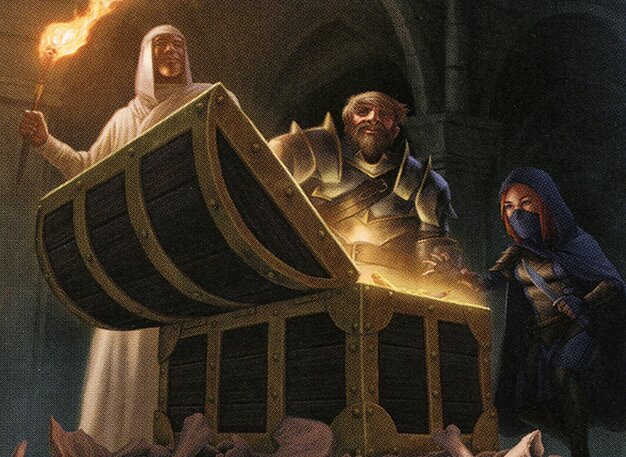
Magic items are the rewards of adventure. A well-chosen item can transform a character's effectiveness and define their identity for years of play.
Rarity Tiers
| Rarity | Typical Level | Attunement | Power Level |
|---|---|---|---|
| Common | 1+ | Rarely | Minor convenience |
| Uncommon | 1+ | Sometimes | Meaningful but not game-changing |
| Rare | 5+ | Often | Significant power boost |
| Very Rare | 11+ | Usually | Dramatic impact |
| Legendary | 17+ | Always | Campaign-defining |
| Artifact | Any | Yes (cursed usually) | Reality-warping |
Attunement
Some items require attunement — a short rest spent bonding with the item. You can be attuned to a maximum of 3 items at once. Exceeding this limit requires dropping attunement to an existing item.
To attune: spend a Short Rest with the item. Can unattuned at any time (no rest required).
Essential Items Every Adventurer Wants
Uncommon (levels 1–5)
Bag of Holding — A bag that holds 500 lbs / 64 cubic feet in an extradimensional space weighing only 15 lbs. Every party needs one. Do not put it inside another Bag of Holding — it tears open a rift to the Astral Plane.
Boots of Elvenkind — Advantage on Stealth checks that involve moving quietly. No attunement required. Excellent for any character who needs stealth.
Cloak of Protection — +1 AC, +1 to all saving throws. Attunement required. One of the strongest uncommon items.
Goggles of Night — Darkvision 60 ft if you don't already have it. Essential for Humans, Half-Elves, and others in dark dungeons.
Wand of Magic Missiles — 7 charges, expend 1–3 for Magic Missile (guaranteed hits). Recharges 1d6+1 per dawn.
+1 Weapon — Simple but powerful. +1 to attack rolls and damage rolls. Bypasses nonmagical resistance.
Rope of Climbing — 60 ft rope that can animate itself to climb, tie itself around objects. Free your hands for combat during ascents.
Rare (levels 5–10)
Staff of the Woodlands — +2, casts Animal Friendship, Awaken, Barkskin, Locate Animals/Plants, Speak with Animals/Plants, Wall of Thorns. Outstanding for Druids.
Headband of Intellect — Sets your Intelligence to 19. Transforms Wizards who rolled poorly; enables Intelligence builds on non-Wizards.
Belt of Giant Strength (Hill) — Sets Strength to 21. Makes any martial character a brute.
Winged Boots — 4 hours fly speed equal to your walking speed per day. Incredible mobility and tactical advantage.
Ring of Spell Storing — Holds up to 5 levels of spells. Allies can cast spells into it; you can spend them. Share Revivify, Counterspell, or Shield when needed.
Necklace of Fireballs — 1d6+3 beads, throw for Fireball-equivalent. Great for non-casters who want AOE.
Dagger of Venom — Coats itself in poison on command (1×/day). +1 to attacks. Excellent rogue weapon.
Very Rare (levels 11–16)
Cloak of Displacement — Attackers have Disadvantage against you until you take damage. Requires attunement. Dramatically reduces hits per combat.
Ring of Regeneration — Regain 1d6 HP per 10 minutes. If you are missing limbs, they grow back after days. Near-immortal endurance.
Staff of Power — +2 to attack/damage/spell DC. 20 charges, casts major spells (Fireball, Cone of Cold, Globe of Invulnerability, Wall of Force, Lightning Bolt). Break it for a retributive strike (devastating AOE, you might survive).
Mantle of Spell Resistance — Advantage on all saving throws against spells. Attunement. Indispensable vs caster enemies.
+3 Weapon — Best weapon bonus available. +3 to all attacks and damage.
Legendary (levels 17+)
Vorpal Sword — +3 longsword. On a 20, instantly decapitate creatures without legendary resistance. Kills most creatures instantly.
Plate Armour of Etherealness — Wear to become Ethereal for 10 minutes (1×/day). Pass through walls, observe undetected, escape any situation.
Holy Avenger — +3 Paladin weapon. Aura of protection vs spells (10 ft, advantage on all saves). Deals extra 2d10 Radiant vs Fiends and Undead.
Deck of Many Things — The most notorious item in D&D. Draw cards for effects ranging from instant godhood to total soul loss. Do not draw from this unless you are ready for anything.
Crafting Magic Items (2024)
In 2024, crafting magic items uses the downtime system: - You need the Crafter feat or Artificer class for the best results - A formula or blueprint for the item - Materials worth half the item's market value - Time: 10 days per 25 gp of market value - A check at the end (or progress over multiple downtime periods)
This is handled between sessions and doesn't interrupt adventures.
Identifying Magic Items
In 2024: you can identify a magic item during a Short Rest by examining it. No spell required. The Identify spell is still useful for cursed items (it reveals the curse) and for knowing exact properties immediately.
🎭 Roleplaying & Storytelling
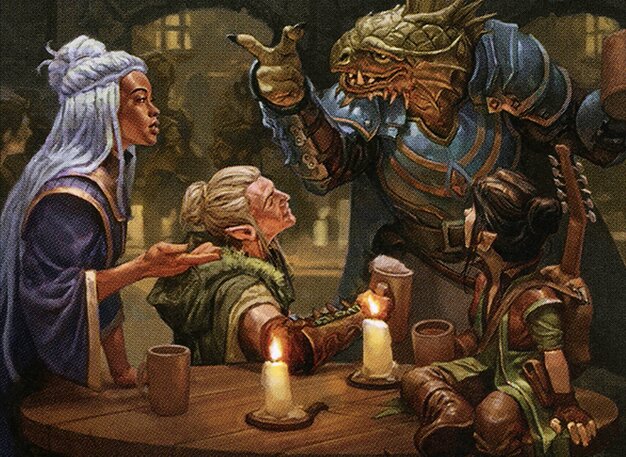
Roleplaying is what separates D&D from every other game. It is collaborative fiction where your choices matter, your character grows, and the story is genuinely unpredictable.
Building a Character with Depth
A character is more than stats and class features. Three questions that create depth:
1. What does your character want? Not just "treasure and power" — a specific goal. Reunite with a lost sibling. Prove themselves to a parent who never believed in them. Understand the arcane mystery that destroyed their village. Wants drive decisions.
2. What does your character fear? Fear creates drama. A Paladin who fears losing their faith. A Rogue who fears being seen as a villain. A Fighter who fears letting the party down. When fear is tested, roleplay happens naturally.
3. What does your character believe? An ethical code, a philosophy, a superstition. "Always protect the innocent." "Contracts are sacred." "Magic corrupts; I use it anyway." Beliefs create conflict — with the world, with other characters, with themselves.
The D&D Alignment System
Alignment describes moral and ethical outlook. In 2024, it is flavour, not a mechanical rule.
| Lawful | Neutral | Chaotic | |
|---|---|---|---|
| Good | Lawful Good | Neutral Good | Chaotic Good |
| Neutral | Lawful Neutral | True Neutral | Chaotic Neutral |
| Evil | Lawful Evil | Neutral Evil | Chaotic Evil |
- Lawful: Respects order, tradition, law — even when inconvenient
- Chaotic: Prioritises freedom, impulse, and personal judgment over external structures
- Good: Actively works to help others and prevent harm
- Evil: Willing to harm others for personal gain
- Neutral: Neither extreme; practical, context-dependent
Most player characters are Good or Neutral. Evil characters are difficult to play cooperatively — discuss with your DM before going Evil.
Interacting with NPCs
Every NPC the DM voices is a character, not just a quest dispenser. Engage them:
Ask questions. "What do you know about the ruins to the east?" "Have you seen anyone suspicious lately?" NPCs have information. Talking to them is how you find it.
Use skills, but roleplay first. Persuasion, Deception, and Intimidation work better if you actually roleplay the attempt. "I roll Persuasion" after doing nothing is less satisfying than attempting an argument and then rolling to see if it works.
Remember faces. The merchant you bought from in session 2 might be a recurring character. The innkeeper's name is Morwena. The corrupt guard's name is Aldric. Note them. Reference them later. DMs remember when players do this and reward it.
Read the emotional temperature. Insight tells you what an NPC is really feeling. Matching that energy (confronting someone who's scared, not shouting at someone who's already cowed) gets better results.
Conflict Between Player Characters
Disagreements between PCs are natural. Drama between PCs can make a great story. But there are rules: - PvP (Player vs Player) combat should be discussed and agreed on before it happens - Player agency is sacred — no player should control another's character - If real conflict arises at the table (not character conflict), pause and address it as players
The Improv Principle: "Yes, And"
The best roleplay moments come from building on what others offer.
Someone says "I think this mysterious merchant might be a shape-changer." Instead of "that's ridiculous," try "yes, and I've noticed his shadow doesn't quite match his movements." You've created something together.
Say yes to the story. Accept complications. Be willing to fail interestingly.
Managing Death and Loss
Character death is part of D&D. How to handle it: - Own the moment. Play the death scene fully. Let it have weight. - Create your next character. Often, players discover they like their new character more than the old one. - Connect your new character. Ask the DM to introduce your new character in a way that ties to the current story. - Don't take it personally. The dice are neutral. The DM didn't target you.
Backstory and the DM
Your backstory is a resource for your DM, not just flavour text. When you write: - "My character's mentor was killed by the Crimson Hand thieves guild" - "I'm searching for my missing brother, last seen near the Ashwood Forest" - "I was framed for a murder I didn't commit and now I'm wanted"
...you are handing the DM story hooks. Good DMs use these. Write them with intent.
Keep backstory to one page or less. The DM needs specifics — names, places, organisations — not a full novel.
📚 Resources & Communities
Official 2026 Resources
D&D Beyond — The official platform. Character builder, rules compendium, digital books, integrated dice. The centre of D&D's digital ecosystem.
Wizards of the Coast D&D Homepage — Official announcements, free articles, adventure previews, errata.
D&D Free Rules 2024 — The full free ruleset. Covers most of what you need to start.
Core 2024 Books: - Player's Handbook 2024 — Character creation, rules, spells, classes - Dungeon Master's Guide 2024 — Running the game, magic items, setting advice - Monster Manual 2024 — Every monster, revised and updated
Community Tools (Free)
| Tool | Purpose |
|---|---|
| Improved Initiative | Free combat tracker for DMs |
| Dungeon Scrawl | Quick dungeon maps |
| Kobold Fight Club / Kobold+ | Encounter builder and CR calculator |
| Aidungeon / ChatGPT | NPC dialogue generation, improv ideas |
| Donjon | Random dungeon, name, and encounter generators |
| 5eTools | Comprehensive rules reference (third-party) |
| Roll20 | Virtual tabletop, free tier |
| Foundry VTT | Premium virtual tabletop, one-time purchase |
Communities
Reddit: - r/DnD — General discussion, art, questions - r/DMAcademy — DM advice, encounter design, running better games - r/DnDNext — Rules discussion and character optimisation - r/lfg — Find players and DMs
Discord: - D&D Beyond Official Discord — Rules questions, community - r/DnD Discord — Large community, channels for everything - Adventurers League — Organised play community
Podcasts & Shows: - Critical Role — Professional voice actors playing D&D; the most famous D&D actual-play show - Dimension 20 — Brennan Lee Mulligan DMs inventive campaigns; high production value - The Adventure Zone — The McElroy family; comedic, heartfelt - Worlds Beyond Number — Smaller cast, character-focused roleplay
Learning Content
YouTube: - Treantmonk's Temple — Class guides, optimisation, explained accessibly - Dungeon Dudes — Class reviews, campaign advice, beginner tutorials - Web DM — Deep dives into lore, monsters, and world-building - Ginny Di — Character creation, roleplay tips, beginners - Matthew Colville — Running the Game series — essential DM advice - Zee Bashew — Animated spell and rules explainers
Books for DMs: - The Monsters Know What They're Doing — Keith Ammann. How monsters actually fight intelligently. - Return of the Lazy Dungeon Master — Mike Shea. Prep less, play better. - Strongholds & Followers / Kingdoms & Warfare — Matt Colville. Expanding the mid-high level game.
🎲 Roll for Adventure
D&D 2024 is the best the game has ever been. The 2024 Player's Handbook streamlined 10 years of rulings into clean, functional rules. Every class is worth playing. Every species fits any class. Every background gives you meaningful power from day one.
Whether you are: - A first-time player building your first character - A veteran revisiting the hobby after years away - A DM designing your first world - A group that plays every week and just wants to be better at it
...this guide exists to help you play more, understand more, and enjoy every session.
The dice are neutral. The story is yours. Roll well.
"You don't need a reason to go adventuring. The dungeon is there. The darkness is at the edge of the torchlight. Go find out what's in it."
📄 Licence
This guide is a fan-made reference document for Dungeons & Dragons 5e (2024 edition). All D&D game rules, mechanics, spells, monsters, and setting material are the property of Wizards of the Coast / Hasbro.
This guide is not affiliated with, endorsed by, or connected to Wizards of the Coast.
D&D game mechanics are covered under the Creative Commons CC-BY-4.0 license as released by Wizards of the Coast under the SRD 5.1 and SRD 5.2 documents. Specific setting lore and proprietary content remain the property of Wizards of the Coast.