Playing the Game
Combat, magic, weapons, wilderness, and the monsters that want to kill you.
⚔️ Combat — The Action Economy
Combat in D&D 2024 is structured and turn-based. Understanding action economy — how many things you can do per turn — is the key to winning fights.
How Combat Begins
- DM calls for Initiative: Everyone rolls 1d20 + their Dexterity modifier (or Initiative modifier). Higher goes first.
- Surprise: If any creature is surprised (DM determined), they can't act on their first turn and can't use Reactions until after their first turn.
- Combat rounds: Each round = approximately 6 seconds. Everyone acts in Initiative order. Repeat until the fight ends.
Your Turn: Four Resources
Every turn you have:
| Resource | What You Do With It |
|---|---|
| Action | Attack, cast a spell, Dash, Disengage, Dodge, Help, Hide, Ready, Use an Object |
| Bonus Action | Specific class features, some spells, Two-Weapon Fighting, some item uses |
| Movement | Up to your Speed (usually 30 ft). Split before/during/after your Action. |
| Reaction | Once per round (any turn). Opportunity Attacks, Shield spell, Counterspell, class features. |
Critical Rule: Bonus Actions only exist when something specifically says "as a Bonus Action." You cannot choose to convert an Action into a Bonus Action.
The Action Menu
Attack: Make one weapon attack (or more if you have Extra Attack). On your turn you can also Grapple or Shove as part of the Attack action (replacing one attack).
Cast a Spell: Cast any spell with a "Action" casting time. Spells with "Bonus Action" casting time use your Bonus Action instead.
Dash: Your movement doubles for this turn. Useful for reaching cover, closing gaps, or fleeing.
Disengage: Your movement doesn't provoke Opportunity Attacks for the rest of this turn. Essential for getting out of melee safely.
Dodge: Until your next turn, attack rolls against you have Disadvantage (if you can see the attacker), and you have Advantage on Dexterity saving throws. You lose the benefit if Incapacitated or if your Speed drops to 0.
Help: Give one ally Advantage on their next attack against a creature you can see, OR Advantage on the next ability check they make. Valid support action for characters who can't attack.
Hide: Make a Stealth check to become Hidden. You need to be Heavily Obscured or behind suitable cover. Hidden creatures gain Advantage on attacks; creatures can't target you with attacks if they can't see you.
Ready: Declare a trigger and an action to take when it happens. Reaction is used when the trigger occurs. "If the mage starts casting, I fire my arrow."
Use an Object: Interact with an item (pull a lever, open a chest, etc.). Minor interactions (draw a weapon, open a door) are usually free as part of movement.
Making an Attack
- Choose target within range
- Roll 1d20 + Attack Bonus (Proficiency Bonus + Str or Dex modifier for melee; Dex for ranged; spellcasting ability for spell attacks)
- Compare to target's Armour Class (AC): meet or beat to hit
- On a hit: roll damage dice + relevant modifier
- On a Critical Hit (natural 20): double the number of damage dice rolled
Critical Hit Rule (2024): Roll all damage dice twice. Add modifiers once. Example: Longsword 2d8+4 on a crit (not d8+4 doubled).
Armour Class (AC)
| Armour Type | Base AC |
|---|---|
| No armour | 10 + Dex modifier |
| Leather (Light) | 11 + Dex modifier |
| Studded Leather (Light) | 12 + Dex modifier |
| Hide (Medium) | 12 + Dex modifier (max +2) |
| Chain Shirt (Medium) | 13 + Dex modifier (max +2) |
| Scale Mail (Medium) | 14 + Dex modifier (max +2) |
| Breastplate (Medium) | 14 + Dex modifier (max +2) |
| Half Plate (Medium) | 15 + Dex modifier (max +2) |
| Ring Mail (Heavy) | 14 |
| Chain Mail (Heavy) | 16 |
| Splint (Heavy) | 17 |
| Plate (Heavy) | 18 |
| Shield | +2 to any of the above |
Heavy armour does not use Dexterity for AC but imposes Disadvantage on Stealth checks.
Advantage and Disadvantage
Advantage: Roll 2d20, take the higher result. Significantly increases average roll by ~3–4 points. Disadvantage: Roll 2d20, take the lower result. Significantly reduces average roll.
They cancel out: multiple sources of Advantage or Disadvantage don't stack — if you have both, you roll normally.
Weapon Mastery Properties (2024)
Every weapon has a Mastery property. Fighters, Barbarians, Paladins, and Rangers (and Monks with certain features) can use these. You choose which weapons you apply Mastery to.
| Property | Weapon Examples | Effect |
|---|---|---|
| Cleave | Greataxe, Halberd | After hitting a creature, attack a different adjacent creature with the same weapon (no attack roll bonus from stats) |
| Graze | Glaive, Greatsword | On a miss, still deal weapon modifier damage |
| Nick | Dagger, Hand Axe, Sickle | The Light property extra attack doesn't cost your Bonus Action |
| Push | Pike, Warhammer, Maul | On hit, push target up to 10 ft directly away |
| Sap | Mace, Quarterstaff, Flail | On hit, target has Disadvantage on their next attack roll |
| Slow | Javelin, Club, Trident | On hit, Speed reduced by 10 ft until start of your next turn |
| Topple | Longsword, Morningstar, Greatclub | On hit, target must succeed a Constitution save (DC 8 + Proficiency + Str/Dex) or be knocked Prone |
| Vex | Rapier, Shortsword, Hand Crossbow | On hit, gain Advantage on your next attack against the same target |
Conditions Reference
| Condition | Key Effect |
|---|---|
| Blinded | Fail any check requiring sight; attacks have Disadvantage; attacks against have Advantage |
| Charmed | Can't attack charmer; charmer has Advantage on social checks |
| Deafened | Fail checks requiring hearing; can't hear |
| Frightened | Disadvantage on checks/attacks while source is in sight; can't willingly move closer to source |
| Grappled | Speed = 0. Ends if grappler is Incapacitated or target escapes (Str/Dex vs Grappler's Athletics) |
| Incapacitated | Can't take Actions or Reactions |
| Invisible | Can't be seen. Attacks have Advantage; attacks against have Disadvantage |
| Paralysed | Incapacitated + can't move or speak. Auto-fail Str/Dex saves. Attacks have Advantage. Hits within 5 ft are crits |
| Petrified | Like Paralysed + Resistant to all damage + can't be poisoned |
| Poisoned | Disadvantage on attack rolls and ability checks |
| Prone | Movement costs double; attacks Disadvantage; melee attacks within 5 ft have Advantage |
| Restrained | Speed = 0; attack rolls have Disadvantage; Dex saves have Disadvantage; attacks against have Advantage |
| Stunned | Incapacitated + can't move. Auto-fail Str/Dex saves. Attacks have Advantage |
| Unconscious | Like Paralysed + Prone + unaware of surroundings |
| Exhaustion (2024) | Each level: −1 to all D20 Tests and Spell Save DCs. Level 10 = death. Removed 1/Long Rest |
Death Saving Throws
When you drop to 0 HP: - You fall Unconscious and are dying - Each turn, roll 1d20 (no modifiers) - 10 or higher: Success. 3 successes = Stable (no longer dying, still unconscious) - 9 or lower: Failure. 3 failures = dead - Natural 20: Regain 1 HP and stand up - Natural 1: Counts as 2 failures - Taking any damage while at 0 HP = 1 automatic failure - Critical hit while at 0 HP = 2 automatic failures
Any healing (including Healing Word, Lay on Hands, or a potion) immediately ends the dying state and restores the rolled HP.
Concentration
Many powerful spells require Concentration. Rules: - You can only concentrate on one spell at a time. Casting another concentration spell immediately ends the first. - Taking damage while concentrating: Constitution saving throw. DC = 10 or half the damage taken (whichever is higher). Fail = concentration breaks. - Incapacitation or death breaks Concentration automatically. - War Caster feat: Advantage on Concentration saves - Resilient (Constitution) feat: Proficiency in Con saves (adds to Concentration saves)
Opportunity Attacks
When a creature you can see leaves your melee reach, you may spend your Reaction to make one melee weapon attack against it. This does NOT trigger if the creature uses Disengage.
Avoiding Opportunity Attacks: - Use the Disengage action - Be Teleported or moved by someone else (not your own movement) - Mobile feat (no OA from creatures you attack)
Short Rest and Long Rest
Short Rest: 1 hour of light activity. Benefits: Warlocks recover Pact Magic slots; Fighters recover Action Surge and Second Wind; Monks recover Focus Points; all characters may spend Hit Dice to heal (roll die + Con modifier per die spent).
Long Rest: 8 hours (6 hours sleep minimum). Benefits: Full HP recovery; recover all spell slots; recover most class resources; reduce Exhaustion by 1 level. Limit: once per 24 hours.
🔮 Magic & Spellcasting

How Spells Work
Every spell has: - Level (0–9): 0 = Cantrip (no resource cost). 1st–9th use spell slots. - Casting Time: Action, Bonus Action, Reaction, or longer (1 minute, 1 hour, etc.) - Range: Self, Touch, or a specific distance - Components: V (verbal — must speak), S (somatic — must gesture), M (material — must have specific item) - Duration: Instantaneous, Concentration (ends when broken), or a fixed time - School of Magic: Abjuration, Conjuration, Divination, Enchantment, Evocation, Illusion, Necromancy, Transmutation
Spell Slots
Casting a spell of level 1 or higher expends a spell slot of that level or higher. You regain all slots on a Long Rest (except Warlock, who recovers on Short Rest).
Upcasting: Casting a lower-level spell with a higher-level slot usually improves its effect. Cure Wounds cast with a 2nd-level slot heals 2d8 + modifier instead of 1d8 + modifier.
Spell Save DC
When your spell forces a saving throw: DC = 8 + Proficiency Bonus + Spellcasting Ability Modifier
Example: Level 5 Wizard with 18 Intelligence (+4): DC = 8 + 3 + 4 = 15
Cantrips
Cantrips are free — no slot required. They scale automatically as you gain levels (typically at 5, 11, 17).
| Cantrip | Class | Effect |
|---|---|---|
| Eldritch Blast | Warlock | 1d10 Force, 120 ft range, scales to 4 beams at level 17 |
| Fire Bolt | Wizard/Sorcerer | 1d10 Fire, 120 ft range |
| Toll the Dead | Cleric/Wizard | 1d8/1d12 Necrotic. d12 if target is missing HP. No attack roll — Wis save |
| Sacred Flame | Cleric | 1d8 Radiant, Dex save, no cover benefit |
| Shocking Grasp | Wizard/Sorcerer | 1d8 Lightning, melee, prevents Reactions until next turn |
| Vicious Mockery | Bard | 1d4 Psychic + Disadvantage on next attack. Wis save |
| Shillelagh | Druid | Your staff/club uses Wis for attacks and deals 1d8 |
| Guidance | Cleric/Druid | +1d4 to one ability check (Concentration) |
| Mage Hand | Many | Spectral floating hand manipulates objects at 30 ft |
| Minor Illusion | Many | Create a small sound or image |
| Prestidigitation | Many | Broad utility: clean, soil, chill, light, create smells |
| Thorn Whip | Druid | 1d6 Piercing, 30 ft, pull target 10 ft toward you |
Spell Slot Table (Full Casters)
| Level | 1st | 2nd | 3rd | 4th | 5th | 6th | 7th | 8th | 9th |
|---|---|---|---|---|---|---|---|---|---|
| 1 | 2 | — | — | — | — | — | — | — | — |
| 2 | 3 | — | — | — | — | — | — | — | — |
| 3 | 4 | 2 | — | — | — | — | — | — | — |
| 4 | 4 | 3 | — | — | — | — | — | — | — |
| 5 | 4 | 3 | 2 | — | — | — | — | — | — |
| 7 | 4 | 3 | 3 | 1 | — | — | — | — | — |
| 9 | 4 | 3 | 3 | 3 | 1 | — | — | — | — |
| 11 | 4 | 3 | 3 | 3 | 2 | 1 | — | — | — |
| 13 | 4 | 3 | 3 | 3 | 2 | 1 | 1 | — | — |
| 15 | 4 | 3 | 3 | 3 | 2 | 1 | 1 | 1 | — |
| 17 | 4 | 3 | 3 | 3 | 2 | 1 | 1 | 1 | 1 |
| 20 | 4 | 3 | 3 | 3 | 2 | 1 | 1 | 1 | 1 |
Essential Spells by Level
Cantrips: Eldritch Blast (Warlock), Fire Bolt (Wizard), Sacred Flame (Cleric), Shillelagh (Druid), Toll the Dead (Cleric), Guidance (support), Mage Hand (utility)
1st Level: - Healing Word — Bonus Action heal 1d4 + Wis. Use it to stand up downed allies without wasting your Action. - Magic Missile — Three darts, always hit, 1d4+1 each. Best guaranteed damage at low levels. - Thunderwave — 15-ft cube, 2d8 Thunder, push creatures 10 ft. No attack roll. - Sleep — Put 5d8 HP worth of creatures to sleep. Devastating at levels 1–3. - Shield — Reaction, +5 AC until your next turn. Negates many hits. - Hex (Warlock) — Bonus damage 1d6 on attacks + Disadvantage on one ability. - Hunter's Mark (Ranger) — +1d6 damage on marked target all combat. - Bless — Concentration, 3 allies add 1d4 to attack rolls and saves. Outstanding value.
2nd Level: - Misty Step — Bonus Action teleport 30 ft to any visible space. Escape, reposition, get through doors. - Hold Person — Paralysed condition (Wisdom save). Auto-crit melee attacks. Fight-ender against humanoids. - Spiritual Weapon (2024) — Bonus Action, 1d8+mod Force, no Concentration (unlike before). Free damage every turn. - Shatter — AOE Thunder, 3d8, no cover. - Invisibility — Turn one creature invisible (Concentration). Great for scouting and escapes. - Moonbeam — Concentration, 2d10 Radiant cylinder, Constitution save. Strong sustained AOE.
3rd Level: - Fireball — 8d6 Fire, 20-ft radius sphere, 150 ft range. The benchmark AOE damage spell. - Counterspell — Reaction, cancel a spell being cast. DC check for higher-level spells. - Fly — Concentration, 60 ft fly speed. Opens enormous tactical options. - Hypnotic Pattern — Concentration, huge AOE of Incapacitated creatures. One of the strongest control spells. - Revivify — Bring a dead creature back to life within 1 minute. Requires 300 gp diamond. - Spirit Guardians (Cleric) — 15-ft radius, 3d8 Radiant/Necrotic, halves speed of enemies. Excellent sustained damage while you move.
4th Level: - Polymorph — Turn target into a beast. Against enemies: turn into CR 0 beast (harmless). For allies: Giant Ape (8/8 Str/Con, 157 HP). Concentration. - Banishment — Send a creature to another plane (Concentration). If they're extraplanar, it's permanent on success. - Wall of Fire — 60-ft line or 20-ft ring of fire, 5d8 Fire damage. Enormous area denial. - Greater Invisibility — Invisible even while attacking (Concentration). Advantage on attacks, enemies Disadvantage against you.
5th Level: - Wall of Force — Impenetrable force wall, blocks all movement and spells. 10 minutes, Concentration. The best defensive spell in the game. - Hold Monster — Like Hold Person but works on any creature type. - Mass Cure Wounds — Heal 3d8+mod to 6 creatures simultaneously. - Animate Objects — Command up to 10 objects as free-action Bonus Action attacks. Scales extremely well.
9th Level: - Wish — The most powerful spell in the game. Can replicate any spell of 8th level or lower perfectly. Or state a wish and the DM interprets it. Risk of losing Wish if used for something beyond replicating another spell.
The Concentration Spells Worth Taking
These are spells where Concentration is justified by the power:
| Spell | Level | Why It's Worth It |
|---|---|---|
| Bless | 1st | Affects 3 allies, massive value |
| Hunter's Mark | 1st | Consistent damage all combat |
| Hex | 1st | Damage + debuff together |
| Hold Person | 2nd | Paralysis = auto-crits |
| Spirit Guardians | 3rd | Damage aura + slow, great sustained |
| Hypnotic Pattern | 3rd | Massive AOE Incapacitation |
| Fly | 3rd | Repositioning, untouchable by melee |
| Polymorph | 4th | Swiss army knife utility |
| Banishment | 4th | Remove one powerful creature |
| Wall of Force | 5th | Impenetrable barrier |
Ritual Casting
Spells with the [R] tag can be cast as Rituals: add 10 minutes to casting time, no spell slot required. Some classes (Wizard, Cleric, Druid) can ritual cast from their entire known spell list. Others (Bard, Warlock via Pact of the Tome) can cast prepared ritual spells.
Essential rituals: Detect Magic, Identify, Find Familiar, Speak with Dead, Commune, Water Breathing.
🗡️ Weapons, Armour & Equipment
Weapon Properties
| Property | Meaning |
|---|---|
| Finesse | Use Str or Dex for attack and damage rolls |
| Light | Can be used in Two-Weapon Fighting. If both weapons have Nick mastery, no BA cost. |
| Heavy | Disadvantage for Small creatures; required for Great Weapon Fighting style |
| Reach | Adds 5 ft to melee range |
| Thrown | Can throw this weapon (use Str or Dex for attack/damage) |
| Two-Handed | Requires two hands to attack |
| Versatile | Can use one or two hands (bigger die two-handed) |
| Loading | One attack per Action with this weapon regardless of Extra Attack |
| Ammunition | Range weapon, recovers spent ammo |
| Range (x/y) | Normal range x ft, Disadvantage beyond that up to y ft |
Key Weapons
| Weapon | Damage | Properties | Mastery |
|---|---|---|---|
| Dagger | 1d4 Piercing | Finesse, Light, Thrown (20/60) | Nick |
| Shortsword | 1d6 Piercing | Finesse, Light | Vex |
| Rapier | 1d8 Piercing | Finesse | Vex |
| Longsword | 1d8/1d10 Slashing | Versatile | Sap |
| Greatsword | 2d6 Slashing | Heavy, Two-Handed | Graze |
| Greataxe | 1d12 Slashing | Heavy, Two-Handed | Cleave |
| Handaxe | 1d6 Slashing | Light, Thrown (20/60) | Vex |
| Maul | 2d6 Bludgeoning | Heavy, Two-Handed | Topple |
| Warhammer | 1d8/1d10 Bludgeoning | Versatile | Push |
| Javelin | 1d6 Piercing | Thrown (30/120) | Slow |
| Longbow | 1d8 Piercing | Heavy, Two-Handed, Range (150/600) | Slow |
| Shortbow | 1d6 Piercing | Two-Handed, Range (80/320) | Vex |
| Hand Crossbow | 1d6 Piercing | Light, Range (30/120), Loading | Vex |
| Heavy Crossbow | 1d10 Piercing | Heavy, Two-Handed, Range (100/400), Loading | Push |
Two-Weapon Fighting (2024)
In 2024, Two-Weapon Fighting uses the Nick mastery property + the Light property.
If both weapons have the Light property: After taking the Attack action, attack once with your off-hand weapon as a Bonus Action (no modifier to damage unless Nick or TWF style).
If your weapons also have the Nick mastery property: The extra off-hand attack is part of the Attack action (not Bonus Action), freeing your Bonus Action for class features.
With the Dual Wielder feat: Light requirement removed; +1 AC while dual wielding.
Armour and Stealth
| Armour Type | Stealth |
|---|---|
| Light | No penalty |
| Medium (some) | Disadvantage on Stealth |
| Heavy | Always Disadvantage on Stealth |
Medium armour imposes Stealth Disadvantage only for certain pieces (chain shirt does not; scale mail does).
🌍 Exploration & The Three Pillars

Exploration is one of D&D's three pillars — and the one most new players underestimate.
Travel and Overland Exploration
Travel Pace:
| Pace | Distance/Hour | Distance/Day | Effect |
|---|---|---|---|
| Fast | 4 miles | 30 miles | Disadvantage on Perception |
| Normal | 3 miles | 24 miles | — |
| Slow | 2 miles | 18 miles | Can use Stealth |
Navigator: One character makes Survival checks to stay on course. Failure = the party gets lost or goes in the wrong direction.
Foraging: One character can forage while travelling at Normal or Slow pace (Survival DC 15 in most terrain, lower in rich environments).
Random Encounters: DM rolls periodically. Not every encounter is combat — it might be a merchant, a traveller with information, or a weather event.
Dungeon Exploration
Light Sources: - Torch: 20 ft bright, 20 ft dim. Lasts 1 hour. - Lamp: 15 ft bright, 30 ft dim. Lasts 6 hours per flask of oil. - Darkvision: See in darkness as dim light (60 ft typically). Dim light = Disadvantage on Perception. - Light spell: 20 ft bright, 20 ft dim. Touch target, Concentration-free, 1 hour.
Dim Light vs Darkness: - Dim Light: Lightly Obscured. Disadvantage on Perception (sight-based) only. - Darkness: Heavily Obscured. Effectively Blinded unless you have Darkvision (which treats it as dim).
Traps: DMs set traps as hidden hazards. Active searching (Investigation) finds them; Passive Perception may notice subtle signs. Thieves' Tools (Dexterity) disarms mechanical traps; Arcana may handle magical ones.
Doors and Locks: Most locks require Thieves' Tools proficiency + Dex check. Locked doors can also be forced (Athletics check, DC varies) or bypassed magically (Knock spell).
Short Rests During Exploration
A Short Rest requires 1 uninterrupted hour of light activity. Warlocks and some martial classes depend on short rests for resource recovery. Encourage your DM to allow them — or play a class less dependent on them.
Social Exploration
Not all exploration is physical. Social pillar activities include: - Gathering Information: Pay for rumors at taverns, charm NPCs for inside knowledge, use Insight to read an NPC's true motives. - Downtime Activities: Between sessions — crafting, carousing, training, research, running a business. - Factions and Reputation: Many settings track how factions view the party. Good standing = better prices, allies, insider knowledge.
Environmental Hazards
| Hazard | Mechanic |
|---|---|
| Falling | 1d6 Bludgeoning per 10 ft (max 20d6). DC 15 Acrobatics to catch a ledge. |
| Suffocation | Hold breath = Con modifier + 1 minutes. After that, 1 round before unconscious, 1 more before death. |
| Extreme Heat/Cold | Con saving throws on a schedule. Failure = Exhaustion levels. Appropriate gear prevents saves. |
| Poison | Many monsters and hazards force Con saves. Poisoned condition = Disadvantage on attacks and checks. |
| Darkness | Effectively Blinded without darkvision or light. No attacks without a way to detect the creature. |
🐉 Monsters & Encounter Design
Challenge Rating (CR)
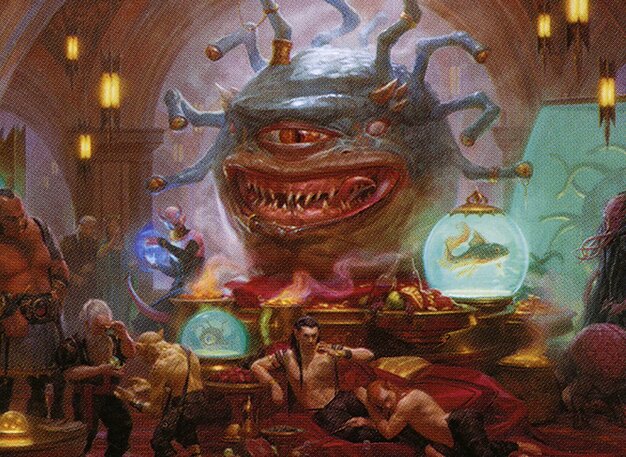
Every monster has a Challenge Rating (CR) — a rough measure of how tough it is. - CR 1/8: Easy at level 1 (Giant Rat, Kobold) - CR 1: Standard level 1 challenge (Goblin Boss, Wolf pack leader) - CR 5: Standard level 5 challenge (Troll, Hill Giant) - CR 10: Standard level 10 challenge (Young Adult Dragon, Beholder) - CR 17–20: Legendary encounters (Adult Dragons, Lich, Storm Giant Quintessent) - CR 21–30: Mythic threats (Tiamat, Tarrasque, Elder Evils)
CR is imprecise. A single CR 5 monster vs a party of 4 is deadly at level 3 but trivial at level 7. Use it as a rough guide, not a guarantee.
Monster Types
| Type | Examples | Key Traits |
|---|---|---|
| Beasts | Wolf, Bear, Dinosaur | No magic resistance, low Int |
| Humanoids | Goblin, Orc, Bandit | Most varied; can be reasoned with |
| Undead | Zombie, Skeleton, Vampire | Immune to Poison, Exhaustion; Turned by Clerics/Paladins |
| Fiends | Demon, Devil, Night Hag | Poison/Fire resistance; Lawful (Devils) vs Chaotic (Demons) |
| Celestials | Angel, Pegasus | Resistance to most damage; Radiant power |
| Dragons | Chromatic, Metallic | Breath Weapon, Legendary Actions, massive HP |
| Constructs | Golem, Animated Armour | Immune to Poison/Psychic; don't need air/sleep |
| Aberrations | Beholder, Mind Flayer, Aboleth | Psionic powers, strange immunities |
| Fey | Pixie, Dryad, Hag | Charm and illusion focused; Fey Stepping |
| Giants | Hill, Stone, Storm | Huge size, thrown rocks, enormous HP |
| Monstrosities | Owlbear, Minotaur, Basilisk | Varied abilities, no pattern |
| Oozes | Gelatinous Cube, Black Pudding | Resistant to many damage types; splits when slashed |
| Plants | Treant, Vine Blight | Susceptible to Fire damage |
| Elementals | Fire Elemental, Galeb Duhr | Immunity to elemental damage type |
Monster Special Features
Legendary Actions: Powerful monsters get extra actions at the END of other creatures' turns (not their own). Up to 3 Legendary Actions per round, reset at start of their turn. This prevents legendary monsters from being quickly locked down.
Legendary Resistance: "The dragon fails a saving throw. It can choose to succeed instead." Usually 3× per day. Prevents instant "save-or-die" spells from ending fights immediately.
Lair Actions: On Initiative count 20, the monster takes an action from its lair itself — animated walls, shifting terrain, magical bursts.
Multiattack: Many monsters attack 2–3 times per turn.
Resistances and Immunities: Know your enemy type. Fire Giants are immune to Fire. Undead are immune to Poison. Beholders are immune to Prone and Grapple. Research before you fight — Arcana, Nature, History checks.
Understanding the 2024 Monster Manual
The 2024 Monster Manual (released February 2025) revises nearly every monster in the game: - Simplified stat blocks: Easier to run, more streamlined abilities - Solo monster rules: Mythic encounters give legendary monsters a second phase when reduced to 0 HP - Updated CRs: Many monsters rebalanced for 2024 party power levels - New monsters: Dozens of new creatures including updated aberrations, fey, and cosmic threats - Bastions of Evil: Major villains (Beholders, Liches, Vampire Lords) now have detailed lair mechanics
Building Encounters
Guideline: - Easy: CR ≤ party level ÷ 2 - Medium: CR ≈ party level ÷ 1 - Hard: CR ≈ party level - Deadly: CR > party level, or multiple hard encounters in a row
The Adventuring Day: 5e is designed assuming 6–8 encounters per Long Rest, with 2 Short Rests. Most groups do 2–3 encounters. This makes short-rest-dependent classes (Warlock, Fighter) relatively stronger in practice.
XP Thresholds Per Character (PHB 2024):
| Level | Easy | Medium | Hard | Deadly |
|---|---|---|---|---|
| 1 | 25 | 50 | 75 | 100 |
| 3 | 75 | 150 | 225 | 400 |
| 5 | 250 | 500 | 750 | 1100 |
| 7 | 300 | 600 | 900 | 1400 |
| 10 | 600 | 1200 | 1900 | 2800 |
| 15 | 1100 | 2300 | 3400 | 5100 |
| 20 | 2800 | 5700 | 8500 | 12700 |
Variety matters: One boss monster with 3–4 minions is usually more interesting than 8 equal enemies. Different enemy types (controller + bruisers + artillery) create dynamic fights.